
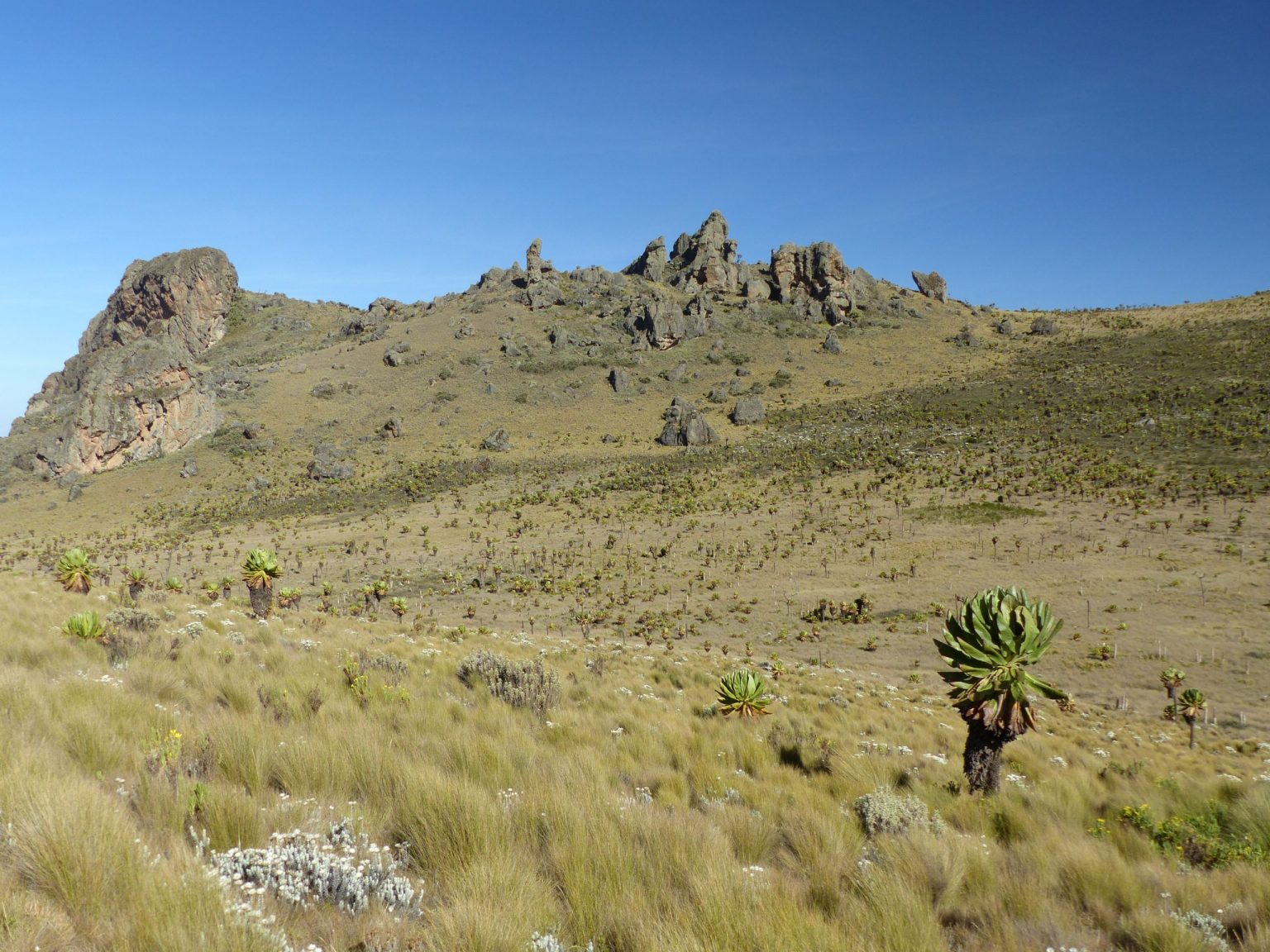
Mount Elgon National Park is an eastern Uganda mountain park best known for hiking, high altitude moorland, forest walks, bird watching and the Wagagai summit at 4,321 metres. Most travellers reach the park through Mbale, then continue to a trailhead or to the Sipi area. The park protects the upper slopes of Mount Elgon, an extinct volcano shared by Uganda and Kenya.
Park snapshot. Mount Elgon works for several kinds of trips. A traveller can spend part of a day on a lower forest walk, devote several days to a summit trek, or combine the mountain with Sipi Falls and time in Mbale. The right plan depends more on walking ambition and weather tolerance than on wildlife viewing.
Mount Elgon National Park Hiking and Mountain Trekking
Mount Elgon National Park hiking is the main reason many visitors enter the protected area. The mountain rises gradually across a very broad volcanic base, and trekking takes hikers through montane forest, bamboo, giant heather and open high altitude moorland. The change in vegetation is one of the clearest ways to feel the gain in elevation.
The highest point is Wagagai at 4,321 metres. Reaching it is a trekking trip rather than a technical climbing exercise on the standard routes. You still need fitness, rain protection, warm layers and enough time for the altitude. The first day on some routes can be steep, while other routes trade speed for a gentler ascent.
Uganda Wildlife Authority information describes several routes to the higher mountain. Sasa starts from Budadiri and is the most direct of the established options. The Sipi route starts higher at the Forest Exploration Centre near Kapkwai and gives a more gradual climb. Piswa and Suam serve the northern side, while Bushiyi has developed as another way onto the mountain. A separate Mount Elgon hiking guide is useful once you are choosing between routes, camps and trip length.
Trek reality. Reports from hikers repeatedly mention cold nights, wet ground and the value of dry socks, gloves and a sleeping mat. A clear morning at lower elevation does not mean the upper mountain will stay dry. Pack for rain and cold even during a drier travel period.
Wagagai Peak and Mount Elgon Caldera Trek
The Wagagai Peak trek reaches the highest point of Mount Elgon, but the summit marker is only part of the mountain trip. The upper area is formed around a large volcanic caldera with ridges, pools, rock formations and broad moorland. Hikers often spend long stretches above the forest line where the trail feels very different from the lower slopes.
Jackson’s Pool and Jackson’s Peak sit near the higher trail system on the western side. The pool lies at about 4,050 metres, so it is already high enough for some visitors to notice slower breathing and heavier legs. The sensible pace is steady rather than fast. Altitude affects people differently, and a strong lowland hiker can still feel tired once the trail is above 4,000 metres.
The caldera also contains hot spring areas and drainage channels. Conditions can be wet underfoot, and cloud can remove distant views quickly. This is one reason the mountain should not be judged only by whether the summit is clear. Much of the trekking value comes from moving through the upper volcanic terrain and the changing plant zones.
Kapkwai Forest Walks and Mount Elgon Nature Tours
A summit is not required to visit the park. Kapkwai forest walks give travellers a shorter Mount Elgon tour through the lower forest near the Forest Exploration Centre. Uganda Wildlife Authority material describes walks of different lengths that pass forest, caves, waterfalls and viewpoints.
This suits visitors who have one free morning or afternoon, families with capable walkers, birders who want more time in the forest, and travellers who do not want a camping trek. The lower mountain can still be wet and uneven. Shoes with grip matter, particularly after rain, because clay and leaf litter can become slippery.
Short walks are also useful before a longer climb. They give you a first look at the terrain without committing to several days on the mountain. If your main goal is a day hike rather than a summit trek, keep that intent separate when planning. Mount Elgon has enough short routes to justify a dedicated day hiking plan.
Mount Elgon Bird Watching and Wildlife Tour
Mount Elgon bird watching is stronger than the park’s reputation for large mammal viewing. Uganda Wildlife Authority records more than 300 bird species in the park. Forest, bamboo, moorland and cliff habitats create different birding zones as elevation changes.
Species listed in official park material include African goshawk, Chubb’s cisticola, white chinned prinia and African blue flycatcher. The wider official checklist is much longer. A birder who moves slowly on the lower forest trails will often get more from the park than someone who treats every day as a race toward the summit.
Large mammals occur in the forests, including elephant and buffalo, but official guidance notes that they are rarely seen. Blue monkeys and black and white colobus are more realistic possibilities in suitable forest areas, though no sighting should be treated as guaranteed. This is not a classic vehicle game drive park. It is a mountain and forest destination where walking, birds and vegetation carry most of the trip.
Set the right wildlife expectation. Come for a mountain trek, forest walk or bird watching tour first. Treat any larger mammal sighting as a bonus rather than the measure of whether the visit was worthwhile.
Mount Elgon Caves, Cliffs and Volcanic Features Tour
Caves and cliffs appear across the Mount Elgon region because of the mountain’s volcanic history and long erosion. A Mount Elgon cave tour can be part of a lower forest walk or a longer trekking route, depending on the trail chosen. Khaukha Cave is associated with the Nkokenjeru Ridge section toward Mbale, while other caves occur around the mountain.
Some online guides mix features from the Ugandan and Kenyan sides of Mount Elgon. That matters when planning. Kitum Cave, for example, is widely associated with the Kenyan side of the mountain and should not be treated as a normal Uganda trail stop. Ask which country, gate and trail a named cave belongs to before building a day around it.
The upper mountain’s volcanic form is easier to read once you reach the caldera rim. Lower down, cliffs, waterfalls and exposed rock tell the same story on a smaller scale. Wanale’s cliffs west of the main massif are another visible part of the broader Elgon geology, though Wanale itself is outside the main high mountain trekking area.
Mount Elgon Cultural Tours Around the Bamasaba and Sabiny Areas
The mountain is tied closely to the communities living around it. A Mount Elgon cultural tour can add context to a hiking trip, particularly around Mbale, the Bamasaba areas on the southern and western slopes, and the Sabiny areas toward Kapchorwa.
The Bamasaba also use the name Masaba for Mount Elgon and link the mountain to their founding traditions. Imbalu, the male initiation rite, is one of the best known Bamasaba cultural practices. It is a living community tradition rather than a performance created for tourists, so visitors should treat ceremonies and family events with care and follow local guidance about photography and participation.
Food can give another entry point. Malewa, prepared from bamboo shoots, is strongly associated with Bamasaba food culture. Coffee farming is equally important across the Elgon slopes. A guided coffee visit can show growing, processing, roasting and local preparation without turning the national park article into a full coffee tour guide.
Sipi Falls and Mount Elgon Combination Trip
Sipi Falls and Mount Elgon fit naturally into the same eastern Uganda trip, but they are different places. Sipi Falls lies outside the national park in the wider Mount Elgon region. The river drops over three main basalt cliffs, and visitors usually walk between waterfall viewpoints on community land.
Sipi can work before or after a longer mountain trek. Before the trek, it gives you time at altitude and a chance to walk without a heavy mountain pack. After the trek, it gives you shorter outings, coffee visits and time to rest. Travellers who try to force a full Sipi hike and a high mountain trek into one rushed day usually miss the point of both.
Mbale is another useful part of the combination. It provides a city base on the western side of Mount Elgon, with road connections toward Budadiri, Sipi and other trail areas. It also gives travellers a place for a proper bed, food and recovery before or after a camping section.
Mount Elgon Outdoor Tours Beyond the Main Trek
The wider Elgon area supports several outdoor tours beyond summit walking. Uganda Wildlife Authority material names mountain biking, rock climbing and fly fishing around the Sipi side of the mountain. These activities sit mainly in the wider Sipi and lower Elgon area rather than along the standard high mountain trekking route.
Mountain biking can range from casual rides on local tracks to harder riding on steep highland roads and trails. Rock climbing uses bolted basalt cliffs around Sipi where qualified providers operate. Fly fishing has also been described on sections of the Sipi River between the park boundary and the upper falls.
Availability can change, so verify the operator, equipment and access arrangements before travelling for one of these activities. They work best as additions to an Elgon stay, not as assumptions built into every national park visit.
Getting to Mount Elgon National Park for a Hiking Trip
Most Uganda side Mount Elgon trips are planned through Mbale. Uganda Wildlife Authority places the park above Mbale in eastern Uganda and notes that the main road continues from Mbale toward Kapchorwa, with smaller roads branching toward trailheads.
Your final route depends on where the hike starts. Budadiri serves the Sasa side. Kapkwai and the Forest Exploration Centre serve the Sipi route side. Northern trailheads require a different road plan. Do not book transport only to “Mount Elgon” without confirming the exact ranger post or trailhead, because the mountain covers a large area.
Private transport is the easiest option when carrying camping equipment or when departure times are fixed. Public transport can get travellers into the main towns, then local transport may be needed for the last section. Rain can make smaller access roads slower. Build spare time into the morning rather than planning to arrive at a trailhead at the last possible minute.
Mount Elgon National Park Weather and Trek Conditions
Mount Elgon trekking weather changes with altitude and can change during the same day. Official park guidance says climbing is possible throughout the year, with June through August and December through March commonly described as drier periods. Rain can still fall in those months.
Higher ground is cold, particularly at night and before sunrise. Wet clothing becomes a much bigger problem once temperatures drop. Hiker reports often mention cold feet, muddy trails and damp camping conditions, so waterproof packing and dry sleep clothing are practical rather than optional extras.
The wetter periods can make the mountain greener and increase water in streams and falls, but they also raise the chance of slippery trails and cloud. If your dates are fixed, prepare for the conditions rather than cancelling purely because they do not sit inside a classic dry season window.
Mount Elgon National Park FAQ
How much is entry to Mount Elgon National Park? Uganda Wildlife Authority’s Mount Elgon page displays park entry at USD 35 for foreign non residents, USD 25 for foreign residents and UGX 20,000 for East African visitors. The wider UWA tariff system has been going through changes, so confirm the latest applicable park and trekking charges directly with UWA before payment. Trekking support, guides, porters, food, camping and transport can add separate costs.
How difficult is a Mount Elgon National Park trek? Difficulty depends heavily on the route and number of days. Sasa gains height quickly from Budadiri and can feel hard on the first day. Other routes allow a more gradual ascent. The summit is not normally treated as technical climbing, but 4,321 metres is high enough for altitude, cold and fatigue to matter.
How many days do I need for Mount Elgon National Park? A lower forest visit can fit into part of a day. A summit trek normally needs several days, with official park material describing three days as a minimum for extended summit hiking and four days as a more comfortable Sasa plan. Longer route combinations give more time on the upper mountain.
Can I visit Mount Elgon without climbing Wagagai? Yes. Forest walks around Kapkwai, bird watching, lower mountain hikes and visits in the wider Elgon region make sense without a summit. This is a good choice for travellers who do not want to camp or who have limited time.
What should I pack for a Mount Elgon trek? Take sturdy walking shoes, waterproof outerwear, warm layers, gloves, dry socks, a hat, a head torch, water capacity and a sleeping system suited to cold nights if camping. Hiker reports make one point repeatedly: keep a completely dry set of clothes for camp rather than relying on what you wore on the trail.
Is Mount Elgon good for wildlife viewing? It is better treated as a hiking and bird watching park than a large mammal safari park. Elephant and buffalo occur in the forests but are rarely seen. Forest monkeys and birds are more realistic targets, and wildlife sightings remain unpredictable.
Can older travellers hike Mount Elgon? Age alone does not decide suitability. Walking fitness, knee strength, balance on wet ground, tolerance of cold and prior response to altitude matter more. A shorter forest walk may suit someone who does not want a multi day summit trek.
Mount Elgon Hotel & Spa in Mbale can provide a city base before or after an Elgon trip, with rooms, dining, spa facilities and a convenient position for onward road travel. Contact the hotel with your dates and hiking plan, then confirm park permits, trail arrangements and mountain support with Uganda Wildlife Authority or your chosen licensed trekking provider.