
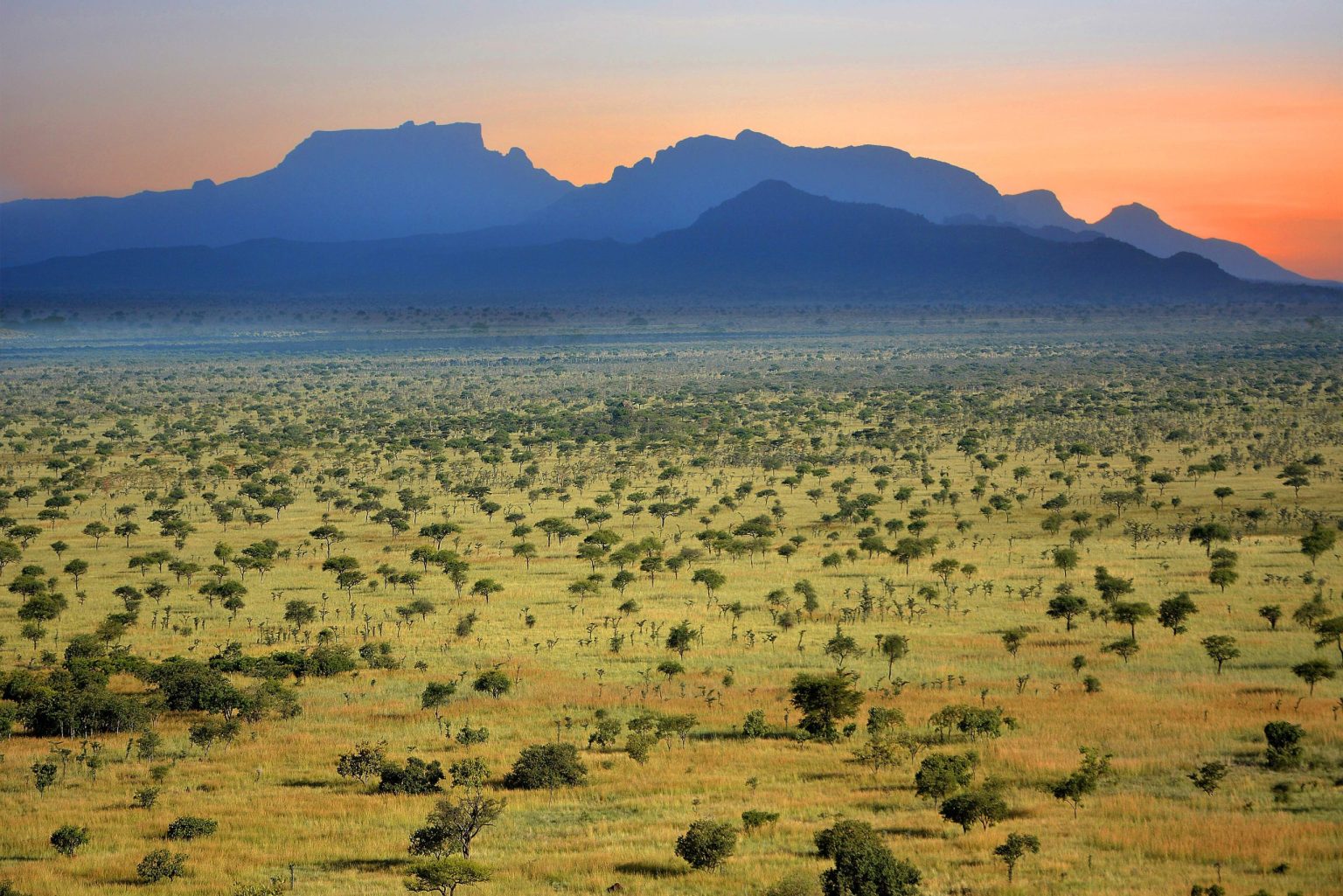
Pian Upe Wildlife Reserve is a large protected area north of Mount Elgon where travellers can look for roan antelope, giraffe, plains mammals and dry country birds in a much quieter setting than Uganda’s main national parks. Visits usually involve a game drive, birding or a guided walk arranged with Uganda Wildlife Authority. The reserve lies in Eastern Uganda between the Elgon highlands and the wider Karamoja region.
Where Pian Upe Wildlife Reserve Is Located
Pian Upe Wildlife Reserve lies north of Mount Elgon in Eastern Uganda. Uganda Wildlife Authority describes a high plateau of rolling plains, wooded savanna, seasonal watercourses and higher ground around Mount Kadam. The reserve connects ecologically with protected areas farther north through the wider Karamoja conservation system.
This location makes Pian Upe useful in two different safari plans. From the south, it can follow Mbale, Sipi Falls or Mount Elgon. From the north, it can form part of a longer Karamoja route. It is not a simple roadside park with a busy gate, paved circuit and several large lodges around the boundary.
That difference matters. Confirm where you are expected to meet the guide or ranger before setting off. Access points and track conditions can change with rain.
What a Pian Upe Wildlife Safari Is Really Like
A Pian Upe wildlife safari feels more exploratory than a game drive in Uganda’s better known parks. Wildlife can be spread across broad plains and woodland, and there may be long periods when the vehicle covers ground without a major sighting. The reserve is not the place to promise a checklist of animals before lunch.
For some travellers, that is the reason to go. There are fewer safari vehicles, fewer fixed routines and less pressure to follow a crowd toward one animal. A guide who knows recent movement becomes valuable because the reserve is large and animals may use different sectors as water and grazing conditions change.
Bring patience. It improves the day.
Roan Antelope in Pian Upe Wildlife Reserve
Roan antelope in Pian Upe are one of the strongest reasons for wildlife focused travellers to visit. Uganda Wildlife Authority material continues to identify the reserve with Uganda’s surviving roan antelope population. That gives Pian Upe a role that is different from the country’s standard park circuit.
Roan are large antelopes with a strong facial pattern and long curved horns. Seeing one is never guaranteed. The useful way to plan is to tell the guide that roan are a priority, then allow enough time to search suitable areas rather than treating the reserve as a quick stop on the road to somewhere else.
Do not confuse a species being present with it being easy to find. Sparse wildlife is part of the current reality reported in older UWA material, although restoration work is active.
Giraffe, Cheetah and Other Pian Upe Wildlife
Pian Upe wildlife includes giraffe, buffalo, waterbuck, Uganda kob, mountain reedbuck, Jackson’s hartebeest, oribi and other plains species recorded by Uganda Wildlife Authority. UWA also records cheetah and leopard in the reserve. Predators are much less predictable than antelope and should be treated as a possibility rather than the basis of a booking.
Giraffes have returned to the reserve through conservation work and are now part of the visitor story. Open ground can make them easier to pick out at distance than smaller species. A pair of binoculars helps, especially when the guide stops to scan plains rather than driving continuously.
Old tour pages sometimes list almost every large mammal ever reported from the wider region. That is poor planning information. Ask what has actually been seen recently.
Bird Watching in Pian Upe Wildlife Reserve
Bird watching in Pian Upe is a strong reason to spend more than a short game drive in the reserve. Uganda Wildlife Authority records ostrich, secretary bird and yellow billed shrike, while conservation partners report a very large bird list across the wider reserve and wetland system.
Birders should tell the guide which groups matter most. Open country species, raptors and wetland birds require different stops. Lake Opeta and seasonal wet areas can add another set of species when conditions are right. Morning hours are useful because temperatures are lower and bird activity is often easier to follow.
Carry binoculars even if mammals are your main interest. Much of Pian Upe’s wildlife value is seen at distance.
Game Drives in Pian Upe Wildlife Reserve
A Pian Upe game drive usually depends on local guidance and recent track conditions. The reserve’s black cotton soils and seasonal drainage can make some routes difficult after heavy rain. A high clearance vehicle is a sensible choice once you leave reliable main roads.
Do not plan the game drive around speed. The reserve is too large for that. Focus on one workable area, listen to the ranger and use time at water, grazing ground and open viewpoints. Morning and late afternoon often make wildlife watching more comfortable because the heat is lower.
If you self drive to the reserve, that does not mean you should enter remote tracks without local direction. A ranger or guide knows which routes are usable and where wildlife has been moving.
Guided Walks and Outdoor Time in Pian Upe
Guided walks in Pian Upe can add a slower view of the reserve where they are operating and approved. Walking changes what you notice. Tracks, plants, insects, bird calls and the scale of the plains become more obvious once you are outside the vehicle.
Walking in a wildlife reserve is not the same as taking an independent nature stroll. Arrange the activity through UWA or an authorised provider and follow the guide’s instructions. Conditions can also be hot, so carry water, wear a hat and use closed shoes.
Ask in advance what the walk covers. A short natural history walk and a longer mountain outing are different activities and need different preparation.
Best Time for a Pian Upe Wildlife Safari
The best time for Pian Upe wildlife viewing depends on road access, rain and what you want to see. Drier months often make tracks easier and can concentrate animals around remaining water and grazing areas. The tradeoff is heat, dust and a browner reserve.
Rain changes the plains quickly. Vegetation grows, bird activity can increase and seasonal water spreads across low areas. Black cotton tracks can also become difficult. UWA’s own description notes that parts of the reserve are subject to inundation during rainy periods.
Before travel, ask for recent road conditions rather than relying on a month label alone. One storm can matter more than a general seasonal summary.
How to Reach Pian Upe Wildlife Reserve
Getting to Pian Upe from the Mount Elgon side normally involves travelling north from the Mbale area toward the reserve and the Karamoja road network. Published route estimates differ, partly because the useful destination is not just the reserve boundary. The actual meeting point or track entry can add time.
Use Mbale as the last major service centre when coming from Kampala or Jinja. Refuel, carry drinking water and confirm the route before leaving. Travellers continuing from Sipi can connect into the same broader corridor, but should not assume that a map line means a quick drive.
Public transport may move you between towns, yet a wildlife visit still needs a plan for the final access and game drive. Private transport is much easier for most visitors.
Where to Stay for a Pian Upe Safari
Pian Upe accommodation is limited compared with Uganda’s major national parks. That makes trip design important. Some travellers use simple accommodation closer to the reserve or continue between Sipi, Mbale and Karamoja depending on the route.
If your visit is part of an Eastern Uganda trip, Mbale can work as the city base before or after the reserve. Mount Elgon Hotel and Spa gives access to full hotel services before the more remote section. For an early reserve game drive, staying nearer Pian Upe is usually better than trying to leave Mbale before dawn and return the same day.
Confirm what is operating before travel. Remote accommodation changes more often than city hotel inventory.
Conservation Work in Pian Upe Wildlife Reserve
Pian Upe conservation has received renewed attention through a co management agreement involving Uganda Wildlife Authority, Space for Giants, local governments and community partners. The goal is to rebuild wildlife populations, protect habitat and improve the economic value of the reserve for neighbouring communities.
For visitors, this means Pian Upe should be seen as a reserve in recovery rather than a finished tourism product. Some old pages describe very sparse wildlife, while newer conservation material reports restoration work and returning species. Both can be true at the same time. Wildlife recovery takes years.
Respect ranger instructions, avoid leaving tracks to chase animals and support authorised guiding. Quiet tourism is part of making the reserve more valuable without adding pressure to wildlife.
What to Pack for a Pian Upe Wildlife Safari
A Pian Upe safari needs practical equipment more than formal safari clothing. Carry binoculars, sun protection, drinking water, closed shoes and a light layer for early morning. Dust can be heavy in dry conditions, so a cloth for cameras and binocular lenses is useful.
When rain is possible, add a light waterproof layer and keep electronics in a dry bag. If you are driving yourself, vehicle preparation matters just as much as personal packing. A spare tyre, jack, basic tools and extra water deserve space in the car.
Do not rely on buying specialist supplies at the reserve. Sort them in Mbale or another major town before the remote leg begins.
Pian Upe Wildlife Reserve FAQ
Is Pian Upe Wildlife Reserve worth visiting?
Yes for travellers who value quiet protected areas, roan antelope, open country and birding. It is a weaker fit if your only goal is seeing the largest possible number of animals in a short time.
What animals can I see in Pian Upe?
UWA records roan antelope, giraffe, buffalo, waterbuck, Uganda kob, mountain reedbuck, Jackson’s hartebeest, oribi, cheetah and leopard among other species. Sightings vary and predators should never be expected.
How much is Pian Upe entrance?
Uganda Wildlife Authority tariffs change by visitor category and activity. Because published online rate cards can lag behind tariff changes, confirm the latest entrance, vehicle and guiding charges directly with UWA before payment.
Do I need a four wheel drive for Pian Upe?
A high clearance vehicle is the safer choice for reserve tracks, especially after rain. Ask for current road advice because some black cotton sections can become difficult when wet.
Can I visit Pian Upe from Mbale?
Yes. Mbale is a practical southern base, but the reserve deserves enough time for access and wildlife viewing. An overnight nearer the reserve may make more sense for an early game drive.
Is Pian Upe good for birding?
Yes. Ostrich, secretary bird and many dry country species are part of the reserve’s appeal, with additional wetland birding around seasonal water and the Lake Opeta system.