
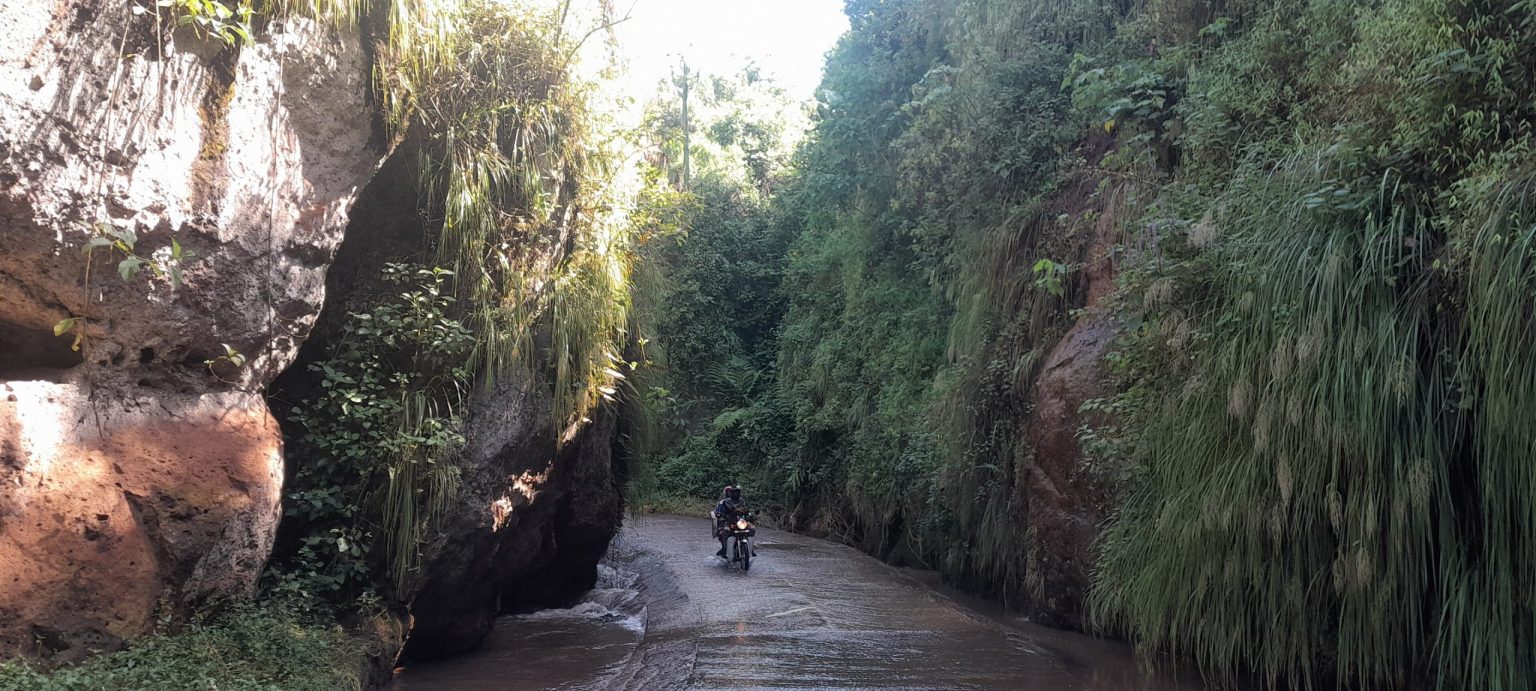
The best places to visit in Eastern Uganda include Mount Elgon National Park, Sipi Falls, Wanale Ridge, Nyero Rock Paintings, Pian Upe Wildlife Reserve, Tororo Rock, Sisiyi Falls, Jinja and the Source of the Nile, plus quieter lake and cultural sites farther north. The region works especially well for travellers who want hiking, waterfalls, rock art, wildlife, coffee country and road trips without relying on one single attraction.
1. Mount Elgon National Park
Mount Elgon National Park is one of the main places to visit in Eastern Uganda for hiking. The mountain sits on the Uganda and Kenya border and contains high altitude forest, bamboo, moorland, waterfalls, caves and a broad volcanic caldera. Wagagai is the highest point on the Ugandan side.
Visitors do not have to commit to a summit trek. Shorter walks from lower trail areas can introduce the forest and foothills, while longer routes such as Sasa and Piswa lead higher onto the mountain. If you are new to Elgon, decide first whether you want a day hike or a multi day trek. The equipment, accommodation and starting point are different.
2. Sipi Falls in Kapchorwa
Sipi Falls is a series of three waterfalls near Mount Elgon and one of the easiest Eastern Uganda attractions to add to a road trip. The main fall drops about 100 metres. Guided walks connect the waterfalls through farms, village paths and viewpoints, with wet and steep sections around parts of the route.
Sipi also works as more than a waterfall stop. Arabica coffee grows on the surrounding slopes, and local coffee tours explain the crop from farm to cup. Abseiling beside the main fall is available for travellers who want a technical activity. Two nights give you more room than trying to arrive, hike and leave on the same day.
3. Wanale Ridge near Mbale
Wanale Ridge rises outside Mbale and is one of the most convenient places to visit in Eastern Uganda if you are based in the city. The ridge has hiking paths, waterfalls, caves, farms and viewpoints over Mbale. Mbale District tourism material also links the hill to local cultural history.
The walk can be short or demanding depending on the route. After rain, mud and wet rock make the steeper lines slower. A local guide is useful because hikers use community paths rather than one fixed national park trail. Wanale is a good choice when you want a proper outdoor activity but do not have time for a Mount Elgon trek.
4. Nyero Rock Paintings
Nyero Rock Paintings near Kumi are among the most important cultural places to visit in Eastern Uganda. The site contains rock shelters with painted geometric forms and figures. Uganda tourism material places Nyero within the region’s rock art heritage and promotes it as a major stop for visitors interested in archaeology and early human expression.
This is a place to slow down rather than race through. Look at the relationship between the paintings and the shelter surfaces, then listen to the site guide explain what researchers know and what remains uncertain. Avoid treating every symbol as if it has a settled translation. Part of the value of Nyero is that some meanings are still debated.
5. Pian Upe Wildlife Reserve
Pian Upe Wildlife Reserve gives Eastern Uganda a wildlife stop that feels very different from the forested Elgon highlands. Uganda Wildlife Authority research shows that Pian Upe remains the country’s refuge for roan antelope, with a recorded population still present in the reserve. The open country can also hold other plains wildlife and birdlife.
Pian Upe is better suited to travellers who accept that wildlife viewing here is not the same as a heavily visited national park circuit. Sightings are not guaranteed and infrastructure is more limited. That is part of the appeal for people who want a quieter protected area. Check access and activity arrangements with Uganda Wildlife Authority before setting off.
6. Tororo Rock
Tororo Rock rises above Tororo town and is one of the region’s clearest geological landmarks. A recent Uganda UNESCO related publication describes it as a prominent geological feature above the town and identifies its volcanic origin. The rock is visible from the surrounding flat country and has long been used as a local tourism site.
A climb gives you a direct view over Tororo and the plains around it. Conditions on the upper route can change, and old travel pages sometimes describe ladders and access arrangements that may not reflect what is operating now. Ask locally before climbing and use a guide if the route is unfamiliar.
7. Sisiyi Falls
Sisiyi Falls in Bulambuli is a quieter waterfall stop north of Mbale. Regional heritage material describes a fall of roughly 110 metres from the Butandiga Ridge and links the site with local cultural use. It receives far less attention than Sipi, which makes it useful for travellers who want another waterfall without repeating the same setting.
The road into the area passes rural communities on the Mount Elgon side of Eastern Uganda. Hiking near the fall can be wet and slippery. If you combine Sisiyi with Sipi, give each site enough time rather than treating Sisiyi as a five minute photo stop.
8. Mbale City
Mbale is the practical base for much of the Mount Elgon side of Eastern Uganda. It connects road travel from Kampala and Jinja with Sipi, Wanale, Mount Elgon trail areas and routes toward Kumi, Soroti and Karamoja. Uganda Tourism Board describes the city as a gateway to the Elgon area.
Mbale is useful even when your main interests are outside the city. You can sleep in a full service hotel, rest between hikes, arrange transport, eat well and avoid moving luggage every day. Mount Elgon Hotel & Spa is one property that can serve this role, with rooms, dining, gardens, conference facilities, pool and spa services.
9. Jinja and the Source of the Nile
Jinja belongs in any broad list of places to visit in Eastern Uganda. The city sits around the Nile and Lake Victoria corridor and has built much of its tourism around the river. Boat trips to the Source of the Nile, rafting, kayaking and riverside stays give Jinja a different character from the mountain region around Mbale.
Jinja also works as a road stop on the way east. The mistake is trying to treat a major river activity as a short coffee break. If you want rafting or a proper boat trip, give Jinja its own day or night. If your priority is Elgon, use Jinja as a meal and rest stop and keep moving.
10. Lake Bisina
Lake Bisina lies farther north in the Teso area and is listed in Uganda tourism records as a Ramsar site. It is a better fit for travellers interested in wetlands, birds and a slower route through Eastern Uganda than for someone trying to collect famous landmarks in one weekend.
Access should be planned locally because wetland travel changes with water level and season. Do not assume you can arrive at a random shoreline and find a formal visitor centre. The value of Bisina is the wetland itself and the surrounding bird habitat.
11. Lake Opeta
Lake Opeta is another major wetland area in Eastern Uganda, also recognised in national tourism records. It forms part of a broad wetland system associated with the Teso and Karamoja edge. For birders and travellers interested in Uganda beyond the standard park circuit, the lake adds a different kind of destination.
Opeta needs more planning than Sipi or Jinja. Road conditions, local access and available guiding can matter greatly. It makes sense as part of a specialist birding or wetland trip rather than a casual detour from Mbale.
12. Soroti and Teso Cultural Stops
Soroti is a regional centre that gives travellers a base for the Teso side of Eastern Uganda. Uganda Tourism Board material highlights cultural interpretation around the Iteso people, while national tourism records list several rock and community sites in the wider area.
The city makes more sense when you are continuing north or east rather than using it as a quick out and back from Mbale. Combine Soroti with Nyero, Lake Bisina or a longer road route if you want the travel time to pay off.
13. Abayudaya Community near Mbale
The Abayudaya community near Mbale is an important cultural and religious story in Eastern Uganda. Uganda Tourism Board material describes the community’s Jewish practice and its historical connection with Semei Kakungulu. Visitors interested in religion, history and community life may find this a meaningful addition to the Elgon region.
Visit respectfully and through an arrangement that makes sense for the community. Religious observance matters. Do not treat worship spaces as casual photo stops, and check timing before arriving, particularly around Shabbat or religious events.
14. Mount Elgon Coffee Country
Mount Elgon coffee country stretches across highland farming areas where Arabica coffee is an important crop. A farm tour around Sipi or another organised Elgon community can show planting, processing, drying, roasting and brewing, depending on the season and the producer.
Coffee is worth treating as a destination theme rather than a fifteen minute add on. The farm visit explains why the cool slopes and volcanic soils matter to local agriculture. Harvest activity varies across the mountain, so ask what is actually happening on the farm during your visit.
15. Mutoto Cultural Site in Mbale
Mutoto is listed in Uganda tourism records as a cultural site connected with circumcision tradition in the Mbale area. The wider Bamasaba Imbalu tradition is central to regional identity and should be discussed with care rather than reduced to spectacle.
If your trip overlaps with cultural activity, use a local cultural guide or recognised community contact. Ask what visitors are welcome to observe and where photography is acceptable. Respect gives you a better visit than trying to chase a ceremony for pictures.
16. Kapchorwa and the Running Highlands
Kapchorwa is worth a stop for travellers interested in the high altitude running culture of the Sebei region. The district is home to several internationally known distance runners, and local tourism promotion connects the town with training on the Mount Elgon slopes. This is not a stadium attraction. The interest is in the place, altitude and community that have produced so many runners.
Kapchorwa also gives you town services near Sipi and a base for roads farther into the Sebei area. If running is part of your trip, arrange a local activity rather than turning up and trying to follow athletes on their training route.
17. Budadiri on the Mount Elgon Slopes
Budadiri is one of the important access areas for Mount Elgon and is associated with the Sasa Route. It belongs on a deeper Eastern Uganda trip because it shows another side of the mountain away from the Sipi tourism zone. Travellers preparing for a trek may pass through the area to meet guides or begin the climb.
If you are not trekking, Budadiri is less compelling as a stand alone sightseeing stop. Its value comes from mountain access, nearby communities and the relationship with the Elgon trail network. That makes it useful for hikers rather than general road trippers.
18. Semei Kakungulu Heritage around Mbale
Semei Kakungulu heritage adds another cultural layer to a stay around Mbale. Uganda tourism material connects Kakungulu with the history of the Abayudaya community in Eastern Uganda. Travellers interested in Ugandan political, religious and community history can use a guided visit to place that story in its local setting.
Arrange the visit through people who know the site and community. The value is in context, not in collecting photographs. This stop pairs naturally with Mbale rather than requiring another long road day.
How to Build an Eastern Uganda Road Trip
Do not try to visit every place in one loop. Eastern Uganda is large and the roads move between river lowlands, cities, mountain slopes, wetlands and wildlife areas. A first trip works well with Jinja, Mbale, Sipi and Mount Elgon. Add Wanale if you enjoy hiking. Add Nyero if heritage matters. Add Pian Upe if wildlife is the priority.
With more time, continue toward Soroti, Bisina and the Karamoja edge. Keep one base for two or three nights where possible. Constant hotel changes consume daylight and make the trip feel like transport rather than travel.
Where to Base Yourself for Eastern Uganda
Jinja is the obvious base for Nile activities. Mbale is the stronger base for Wanale, Mount Elgon, Sipi day trips and road connections farther east and north. Sipi itself is best when the waterfalls and highland atmosphere are the main point of the stay.
If you choose Mbale, Mount Elgon Hotel & Spa can support a hub style itinerary. The hotel is in the city rather than inside Mount Elgon National Park or Sipi, which means you can return to the same room after several day outings and still have restaurant, spa, pool and business facilities available.
Places to Visit in Eastern Uganda FAQ
What are the best places to visit in Eastern Uganda for a first trip?
Start with Jinja, Mbale, Sipi Falls and Mount Elgon. Add Wanale Ridge if you enjoy day hiking and Nyero Rock Paintings if you want a heritage stop.
Where is the best wildlife stop in Eastern Uganda?
Pian Upe Wildlife Reserve is the main wildlife option in this group. Uganda Wildlife Authority research confirms that the reserve still holds Uganda’s roan antelope population.
How much should I budget for an Eastern Uganda trip?
Costs vary widely with private transport, hotel level, guiding and the number of paid activities. Ask for current rates from each site or operator because old online prices can be misleading.
How many days do I need in Eastern Uganda?
Four to six days can cover Jinja, Mbale, Sipi and one or two extra stops without excessive rushing. A deeper route into Teso or Pian Upe needs more time.
Can I use Mbale as a base for Eastern Uganda?
Yes. Mbale works particularly well for Wanale, Sipi, Mount Elgon connections and road trips toward Kumi or the northern Elgon area.
Are all Eastern Uganda attractions suitable in rainy weather?
No. Waterfalls may look stronger, but steep hikes and unpaved access roads can become harder. Check local conditions before leaving your hotel.