
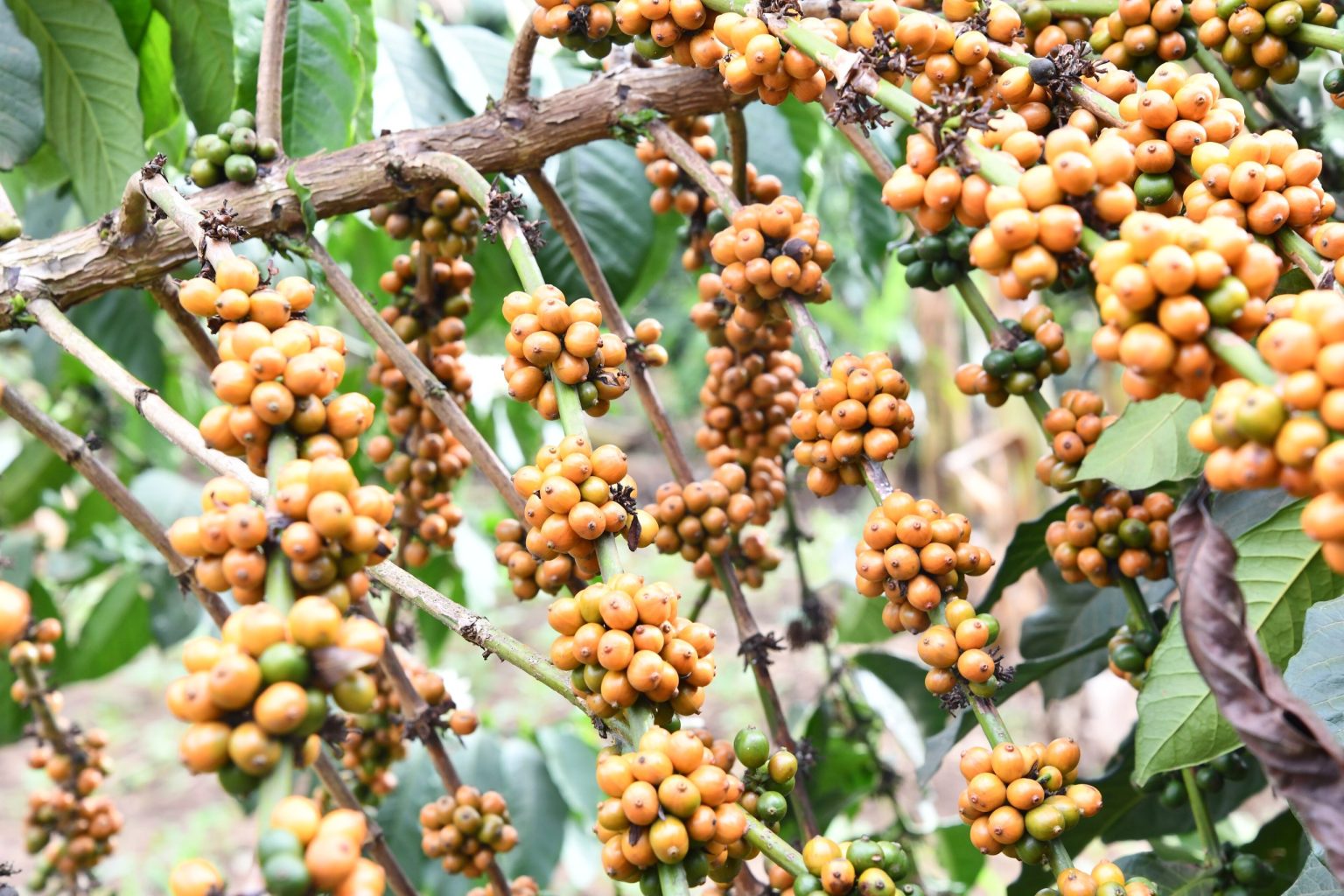
Mount Elgon Coffee Tours take visitors onto Arabica farms where they can follow coffee from the tree through picking, pulping, drying, roasting, grinding and brewing. Tours are easiest to arrange around Sipi, Kapchorwa and the wider Bugisu slopes, with farm activity changing by season. Mount Elgon in eastern Uganda is a major Arabica growing region, supported by high altitude farms and volcanic soils.
Mount Elgon Coffee Tours on Working Arabica Farms
The strongest Mount Elgon coffee tours happen on working farms rather than in a shop that gives a short roasting demonstration. A farm walk lets the guide explain why coffee is planted where it is, how shade is managed, what a healthy cherry looks like and what farmers do between harvest periods.
Arabica coffee is closely linked with the higher parts of eastern Uganda. Uganda Coffee Development Authority material identifies Mount Elgon Arabica as coffee grown in volcanic soils on the mountain slopes, while Bugisu Arabica is associated with the eastern highlands. Farm size, elevation and processing method vary across the region.
That variation matters to a visitor. A small family plot near Sipi can feel very different from a larger organised producer or cooperative in the wider Mbale and Bugisu region. Both can teach you something useful, but they tell different parts of the coffee story.
Ask where the coffee you are tasting was grown. If a tour is marketed as Mount Elgon coffee, the guide should be able to explain the farm, village or producer behind it.
Bean to Cup Coffee Tour Experience on Mount Elgon
A typical bean to cup coffee tour follows the crop in the same order a farmer handles it. You begin with the tree. The guide explains flowering, cherry development, pruning and picking. When ripe coffee is available, visitors may be shown how red cherries are selected rather than stripping every fruit from a branch.
From there, the tour moves into processing. On fully washed Arabica, fresh cherries are pulped so the outer fruit is removed. Fermentation and washing help remove the remaining material around the bean. Drying follows before the coffee is stored, hulled, graded, roasted or sold onward.
Not every small farm demonstrates every commercial step. Some tours use simple hand methods for teaching, especially roasting and grinding. That is fine as long as the guide explains which parts reflect household practice and which parts happen at a larger processing site.
The final cup makes more sense after you have handled the fruit and beans yourself. You can connect the taste with the work that came before it.
Mount Elgon Coffee Farm Tours and Volcanic Soils
Mount Elgon coffee farm tours often talk about soil because the mountain’s volcanic origin is part of the region’s agricultural story. Coffee grows across a range of elevations on the slopes, where temperature, rainfall, soil and farm management influence the crop.
The phrase volcanic soil can become an easy marketing line, so a better tour goes further. Ask how farmers manage erosion on steep ground. Look at shade trees. Notice whether coffee is mixed with bananas or other crops. Ask how water reaches the farm and where processed coffee is dried when rain is frequent.
Those questions turn a scenic walk into an agricultural visit. They also explain why two farms a short distance apart can produce coffee with different cup profiles.
UCDA material describes Mount Elgon Arabica as fully washed coffee with lively acidity and a lingering finish. That is a regional description, not a promise that every cup on every farm tastes the same.
Sipi Falls Coffee Tours and Local Farm Walks
Sipi Falls coffee tours are among the easiest Mount Elgon coffee experiences to add to a short trip. Farms sit around the highland communities near the falls, so a visitor can do a waterfall hike on one part of the day and a coffee visit on another.
This convenience is one reason Sipi appears so often in eastern Uganda itineraries. You do not need to travel deep into the national park to learn about coffee. The farms are part of the settled slopes around the mountain.
A Sipi coffee walk often includes planting, picking when cherries are available, pulping, drying, roasting, grinding and brewing. Some community tours also include household activities, food preparation, craft work or stories about Sebei life. If the purpose of your page or trip is coffee, keep the coffee portion central and treat the cultural content as added context.
Allow enough time. A quick demonstration beside a lodge is not the same as walking through a farm and following the process.
Mount Elgon Coffee Harvest Tours and Seasonal Farm Activity
A coffee harvest tour is more hands on than a normal farm visit because ripe cherries are available to pick and processing activity is easier to see. The problem is that harvest timing is not identical across all Mount Elgon farms.
Uganda Coffee Development Authority profiles for producers on the Elgon slopes show harvest activity extending across several months, with some Sebei and Sipi producers reporting a main period from around September into the early months of the following year. Other Bugisu farm calendars include a main crop and a smaller secondary crop. Elevation and local conditions can move the timing.
For that reason, do not book a trip months ahead based on a single blog’s harvest date. Ask the farm or operator whether ripe cherries are expected during your visit. A coffee tour is still worthwhile outside harvest because pruning, nursery work, drying, stored parchment, roasting and brewing can all be explained.
If you want to pick coffee yourself, say so when booking. That lets the guide choose a farm where the crop stage fits the visit.
Mount Elgon Coffee Processing Tours
Mount Elgon coffee processing tours go deeper than the farm walk. They focus on what happens after a cherry leaves the branch. In the washed process, sorting, pulping, fermentation, washing and drying all affect the final quality of the bean.
UCDA guidance gives a useful distinction between wet and dry processing. Wet processing requires water and equipment, while dry processing handles the cherry in a different way. Mount Elgon is well known for washed Arabica, so seeing a pulpery or processing site can add useful detail for visitors who already know coffee.
Drying is another part worth watching. Beans need to lose moisture in a controlled way, and farmers or processors may use raised beds, tarpaulins or other drying surfaces. The exact method depends on the producer.
At a larger cooperative or processor, grading and storage become visible too. This is where the visitor begins to see the difference between making a cup at home and preparing coffee for a commercial market.
Mount Elgon Coffee Roasting and Tasting Tours
The most social part of a Mount Elgon coffee tasting tour usually comes at the end. Beans are roasted, ground and brewed, sometimes with simple household tools. The process is slower than pressing a button on a cafe machine, which makes it easier to talk about aroma, roast level and preparation.
Do not worry if you are not a coffee expert. You do not need tasting vocabulary to enjoy the session. Compare the smell before and after roasting. Taste the drink without sugar first. Ask whether the coffee is from the same farm you walked through.
If you already buy specialty coffee, ask about variety, washing method, altitude and where the beans are sold. Some producers can answer in detail. Others are small farmers who know the crop through practice rather than formal tasting language.
Buying coffee directly from the producer can be a useful way to take the experience home, but check packaging and luggage rules if you are flying onward.
Mount Elgon Coffee and Cultural Tour Combinations
Coffee is tied to community life on the mountain, so coffee and cultural tours often overlap. Around Sipi and Kapchorwa, guides may introduce Sebei farming life, local food and craft work. On the southern and western slopes, coffee is closely linked with Bugisu and BaMasaba communities.
The overlap should be handled carefully. A cultural visit is not an extra performance attached to a coffee cup. Ask who hosts the activity, what the community wants visitors to learn and whether photography is welcome.
Food can make the visit richer. Malewa, prepared from bamboo shoots, is strongly associated with the BaMasaba region. A community walk may also introduce bananas, vegetables and other crops grown beside coffee.
If you want a deeper cultural day, book that separately rather than stretching a short coffee tour until it becomes rushed.
Planning a Mount Elgon Coffee Tour from Mbale
Mbale is a practical base for travellers building a wider Mount Elgon coffee tour. From the city, you can travel toward Sipi and Kapchorwa or visit coffee areas on the southern and western slopes. This works well for people who want a comfortable hotel night before an early farm visit.
Choose the farm before setting the departure time. The phrase Mount Elgon covers a large area, and two coffee experiences can sit on different sides of the mountain. Road time matters.
Wear shoes that can handle wet soil. Farms are working ground, not paved visitor centres. Carry water and light rain protection. Ask before photographing people at work.
A morning coffee visit can be paired with lunch in Mbale or Sipi. A longer farm and processing day is better left on its own.
Mount Elgon Coffee Tours FAQ
What happens on a Mount Elgon coffee tour?
A good tour starts on a farm and follows coffee through growing, picking when ripe cherries are available, processing, drying, roasting, grinding and brewing. The exact steps depend on the farm and season.
Can I do a coffee tour at Sipi Falls?
Yes. Sipi is one of the easiest places to arrange a farm based coffee visit because coffee is grown around the communities near the waterfalls.
What type of coffee grows on Mount Elgon?
Arabica is the main coffee associated with the higher Mount Elgon slopes. Uganda Coffee Development Authority material describes Mount Elgon and Bugisu Arabica as important eastern Uganda coffees, with washed processing common in the region.
Can I pick coffee during the tour?
Only when ripe cherries are available and the host farm allows it. Harvest timing varies across the mountain, so confirm before booking if picking is a priority.
How much does a Mount Elgon coffee tour cost?
There is no single regional rate. Small community farm visits, private guided tours and longer farm plus processing visits have different prices. Confirm the duration, transport, tasting and any other activities before paying.
Can I combine a Mount Elgon coffee tour with Sipi Falls?
Yes. A waterfall hike and coffee visit fit naturally into the same Sipi stay, though doing both at a relaxed pace is easier when you have a full day or more in the area.
Mount Elgon Hotel & Spa in Mbale can be used as a base for coffee trips toward Sipi, Kapchorwa and the wider Elgon slopes. Guests can plan an early farm departure, return to Mbale for dinner and connect the coffee visit with other eastern Uganda activities.