
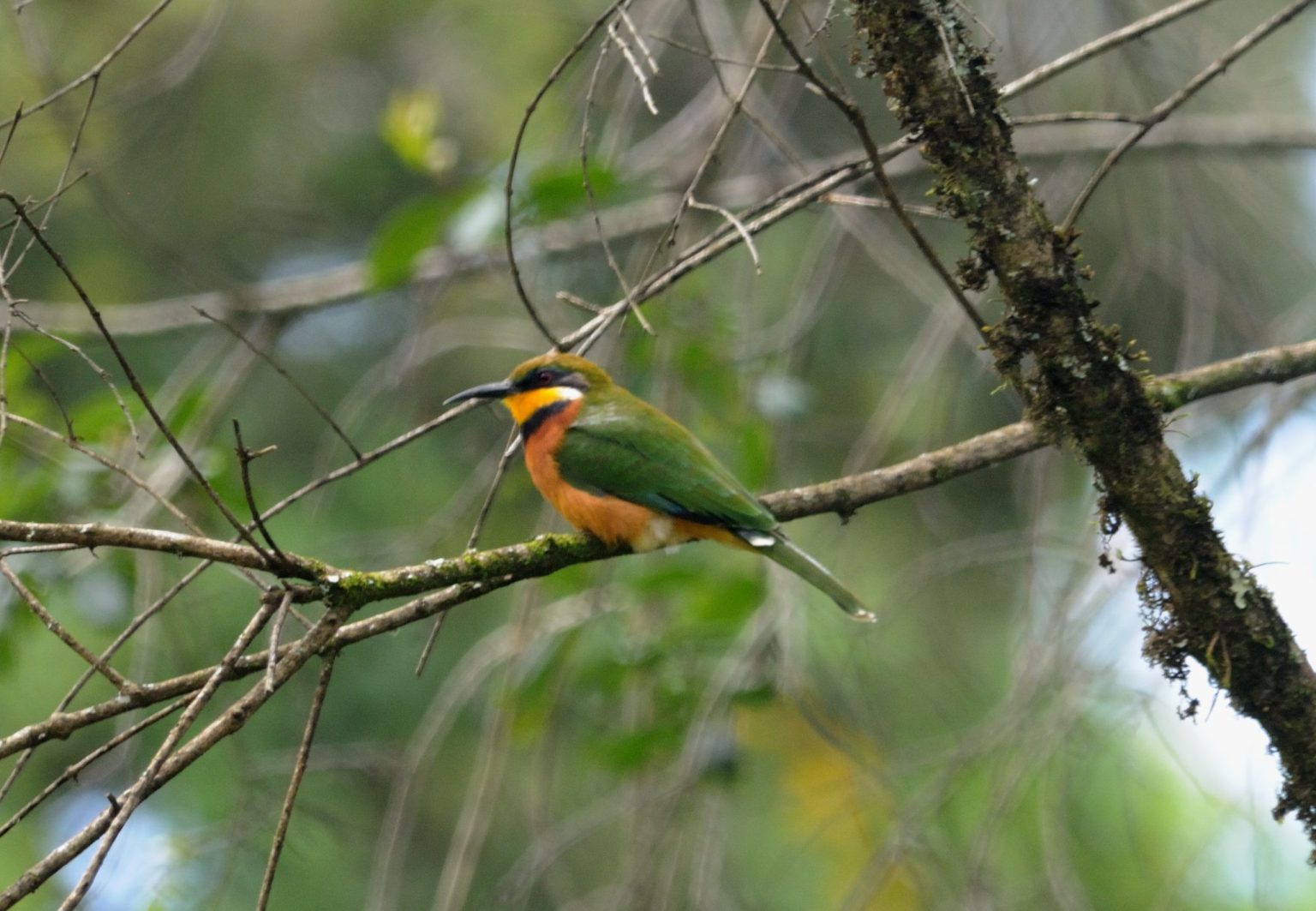
Bird Watching on Mount Elgon is best for travellers who want montane forest birds, high altitude species and quiet guided walks rather than a vehicle based bird safari. Trips can start from Mbale, Sipi or the Kapkwai Forest Exploration Centre, with routes chosen by time and fitness. Mount Elgon National Park in eastern Uganda protects forest, bamboo, heath and moorland habitat used by more than 300 recorded bird species.
Mount Elgon Bird Watching Tours at Kapkwai Forest Exploration Centre
The Kapkwai Forest Exploration Centre is one of the most practical starting points for a Mount Elgon bird watching tour. It sits on the edge of the national park and gives access to forest trails without requiring a summit trek. For a visitor staying in Sipi or Mbale, this is often the easiest way to spend several focused hours birding inside the park.
The forest around the centre is useful because the birding begins close to the trailhead. You are not spending half the day walking through farmland before reaching suitable habitat. Thick secondary growth, riverine vegetation and mature trees create feeding and calling areas for forest birds, while openings along the paths make some species easier to see than they would be in closed canopy.
Birds reported around this part of Mount Elgon include African goshawk, Chubb’s cisticola, white chinned prinia, African blue flycatcher, Chinspot batis, Mackinnon’s fiscal, Baglafecht weaver and several bush shrikes. A guide who birds the area often is useful because many sightings begin with a call, a movement inside foliage or a brief view across a gap.
A half day works if birding is one part of a wider Elgon trip. A full morning is better for a serious birder. Birds are often more active early, and the cooler hours are easier for walking.
Forest Bird Watching Tours in the Chebonet Valley
The Chebonet Valley gives Mount Elgon bird watching tours a strong forest element. Streams, shrubs, forest edges and taller trees sit close together, so a slow walk can produce a varied list without covering a huge distance.
This is birding that rewards patience. A visitor coming from a savannah bird safari may be used to open views and birds sitting clearly on branches. Forest birding is different. Calls matter more. Birds may feed in mixed groups, cross the path quickly or remain partly hidden. Standing still for five minutes at a productive patch can be more useful than walking another kilometre.
Fruit bearing trees can bring pigeons, hornbills, starlings and greenbuls into the same area. Smaller birds may stay lower in shrubs or work along the edge of the path. The result is a tour that can feel slow at first, then suddenly become busy for ten minutes.
Rain changes the pace. Light rain may quieten activity for a while, followed by a burst of feeding when it stops. Carry rain protection even when the morning begins clear. Mount Elgon makes its own local weather, and a forecast for Mbale does not always describe conditions higher on the slope.
Montane Bird Watching Tours for Sunbirds and Turacos
As altitude rises, Mount Elgon bird watching moves toward montane species. The cooler forest and bamboo belt can hold birds that are much harder to find in Uganda’s lower country. This is one reason birders include the mountain even when their main safari is focused on western Uganda.
Tacazze sunbird and golden winged sunbird are among the species often linked with the Elgon highlands. Turacos are another target, with Hartlaub’s turaco and Ross’s turaco reported from the mountain region. Sightings depend on habitat, season, flowering trees and simple luck, so no route should be sold as a guarantee.
Sunbirds can be active around flowering plants and trees. Their movement is quick, and light changes fast in mountain forest. Binoculars with good close focus are useful because a bird may appear much nearer than expected. A camera can help, but a visitor who keeps stopping to change lenses may miss more than they photograph.
Listen too. Turacos can be heard before they are seen, while sunbirds may move through a feeding area in short bursts. A local bird guide can often separate a familiar call from the background noise before a visitor has worked out where to look.
High Altitude Bird Watching on Mount Elgon Hiking Trails
A multi day Mount Elgon hiking trip opens birding habitat that a short forest walk cannot reach. Above the main forest belt, bamboo, heath and moorland create a very different setting. The bird list usually becomes smaller at higher elevation, but the species mix changes.
This is where a birder needs to decide whether the goal is a summit trek with birding or a birding trip that happens to climb. The two are not the same. A summit schedule has distance targets, camp times and weather limits. Serious bird watching moves slower and may require long stops. If birds are the priority, tell the trekking team before the route and number of days are fixed.
Jackson’s francolin is one of the birds associated with the higher Mount Elgon region. Alpine chat is another high country target mentioned in local birding material. The endangered lammergeyer, or bearded vulture, has also been recorded around the mountain, though it should be treated as a possible sighting rather than an expected one.
Wind can make high altitude birding harder. Calls disappear, small birds stay low and binoculars are less steady. Calm morning periods can be far more productive than an exposed afternoon ridge.
Benet Grassland Bird Watching Experience
The Benet grassland adds open country birding to a Mount Elgon tour. Historical park bird records from this area include black and white casqued hornbill, long crested eagle and Verreaux’s eagle. Open grass and forest edge give a different viewing style from the shaded trails around Kapkwai.
Raptors are one reason to spend time looking above the ridges rather than only into bushes. Thermals can bring large birds into view later in the morning. Hornbills may cross between forest patches. The open setting also helps with photography because there is more light and fewer branches between the observer and the bird.
The Benet area has a complex human history and remains home to communities with deep ties to Mount Elgon. A birding visit should be arranged with local guidance and respect for community land, current access conditions and park rules. Do not assume that every track shown on an old map is open to visitors.
Bird Watching Tours Around Sipi Falls
Sipi Falls is useful for travellers who want bird watching without making the national park the only purpose of the trip. The wider Sipi area has farmland, gardens, river vegetation, cliffs and pockets of natural vegetation. That mix can produce a good general bird list between waterfall walks and coffee visits.
Birding around Sipi works best as an early morning activity. Tourist foot traffic is lower, the air is cooler and birds are more active around trees and fields. Later in the day, the same area can be used for a waterfall hike or coffee tour.
Do not expect the Sipi bird list to match a full day inside montane forest. The value is convenience and variety. For a serious birder, Sipi is a base. Kapkwai and other park habitats should still be added.
A hotel base in Mbale can also work, particularly if the trip combines birding with Wanale, Sipi and other eastern Uganda stops. The key is an early departure on the main birding day.
Mount Elgon Bird Watching Trips Through the Seasons
Bird Watching on Mount Elgon is possible through the year, but the best timing depends on what matters most. Drier periods can make trails easier and give longer clear spells for high altitude walking. Wetter months bring more mud, yet forest activity can still be good and flowering or breeding patterns may favour certain species.
Migrant birds can add to the list at some times of year. Resident montane species remain the main reason to come. A birder should not postpone a whole Uganda trip just to chase a perfect Elgon month unless there is a very narrow target species in mind.
Morning remains the most useful daily timing in most seasons. Start early, move quietly and keep the route flexible. If cloud closes in higher on the mountain, lower forest can still produce good birding.
For photographers, bright overcast conditions can be easier than hard midday sun in forest. Rain covers for camera gear and binoculars are worth carrying. A dry cloth inside a small sealed bag is useful once mist or drizzle starts.
Mount Elgon Bird Watching Tour Gear and Walking Pace
A birding tour on Mount Elgon needs less equipment than a summit climb, but footwear matters. Forest paths can be wet, roots can be slick and grass can hold water long after rain stops. Shoes with grip are more useful than heavy boots if the plan is limited to lower trails.
Bring binoculars that you can carry for hours. An eight times pair is comfortable for many forest birders because it gives a wider field of view, while ten times binoculars can help on raptors and distant birds if you can hold them steady. Personal preference matters more than chasing a technical ideal.
A small notebook or phone list helps when many species appear in a short period. Ask the guide to confirm uncertain birds at the time rather than trying to rebuild the morning from memory at dinner.
Clothing should be quiet and practical. Neutral colours work well in forest. A light rain layer belongs in the day bag. Water and a small snack are enough for short walks, while longer mountain routes need the same clothing and food planning as any Elgon hike.
Bird Watching on Mount Elgon FAQ
How many bird species are found on Mount Elgon?
Uganda Wildlife Authority states that Mount Elgon National Park supports more than 300 bird species. The total includes forest, montane and high altitude birds, so the species seen on a short lower forest walk will differ from those possible on a multi day mountain trek.
Where is the best place to start bird watching on Mount Elgon?
Kapkwai Forest Exploration Centre is one of the most practical starting points because it gives direct access to forest trails and sits within reach of Sipi. Serious birders can add higher trails or the Benet area according to target species and access.
Can I combine Sipi Falls and Mount Elgon bird watching in one trip?
Yes. Sipi works well as a base for an early local bird walk followed by waterfall or coffee activities, while a separate morning can be reserved for forest birding inside Mount Elgon National Park.
Do I need a specialist bird guide?
A general hiking guide can help with the route, but a specialist bird guide is better if identifying calls and building a strong species list matter to you. Ask about birding experience before the trip rather than assuming every mountain guide has the same bird knowledge.
Is Mount Elgon bird watching suitable for older travellers?
Yes, if the route is chosen carefully. Lower forest walks can be planned without a summit climb. Tell the guide about walking limits, knee problems or preferred trip length so steep sections can be avoided where possible.
What birds should I look for on a Mount Elgon bird watching tour?
Common target names in park material include African goshawk, Chubb’s cisticola, white chinned prinia, African blue flycatcher, Tacazze sunbird and Jackson’s francolin. The endangered lammergeyer has also been recorded, but sightings are not guaranteed.
Mount Elgon Hotel & Spa in Mbale can serve as a practical base before or after a Mount Elgon bird watching tour, with access toward Sipi, Wanale and the park trailheads. The hotel team can help guests plan room nights around early departures and return times.